You eat well, stay active, and get enough sleep, but something still feels off. Your doctor says your labs are fine. So why doesn’t it feel like it?
Biomarker testing can reveal hidden health issues by showing early changes in blood sugar regulation, inflammation, hormones, and nutrient status, even when standard lab results look “normal.” Your annual physical may rule out immediate disease, but it may not explain why you feel tired by midafternoon, struggle with weight changes, or notice brain fog that clouds your day.
For many people, these symptoms point to early shifts in metabolic health that standard panels aren’t designed to catch. Biomarker testing identifies those shifts sooner, giving you more complete data before minor imbalances become larger concerns.
Why Standard Blood Tests Miss Early Metabolic Changes
A standard lab panel works like a dashboard warning light. It can show when something obvious needs attention, but it does not always explain why your energy, weight, focus, or overall function has changed over the past year.
To understand those changes, a metabolic health-focused naturopathic doctor needs to look beyond basic lab ranges and evaluate the systems that directly influence your energy, weight, and daily function.
What a Standard Annual Panel Checks
Your typical yearly bloodwork usually reviews basic markers such as cholesterol, fasting glucose, complete blood count, and sometimes thyroid function. These tests play an important role in screening for clear abnormalities, but they often focus on problems that are already developed.
That means early changes can go unnoticed. These systems may begin shifting months or years before a standard marker crosses the reference range. A typical physical checks a dozen or so basic markers in isolation. Advanced testing can evaluate more than 100 markers and show the relationships between them, which is where the fuller picture starts to appear.
Why You Can Feel Off While Your Labs Look Fine
You know the feeling. You leave your doctor’s office with a clean bill of health, but nothing about how you feel matches what the numbers say.
“Normal” ranges are broad. Your results may sit inside the standard range while still moving away from your usual baseline. That is one reason you can feel tired, foggy, inflamed, or stuck with weight changes even when your annual labs do not raise concern.
Common concerns that can hide behind “normal” results include:
- Persistent fatigue that sleep does not fix
- Stubborn weight gain despite consistent habits
- Brain fog and dips in concentration
- Low-grade inflammation you can feel but cannot clearly identify
A once-a-year snapshot may miss these changes. A deeper biomarker review helps connect your symptoms to measurable shifts beneath the surface.
What Does Biomarker Testing Measure?
Biomarker testing measures the signals that show how your body is functioning beneath the surface. Instead of only checking whether your results fall inside a basic reference range, a deeper panel evaluates blood sugar regulation, inflammation, hormones, and nutrient status, along with insulin sensitivity, lipid particle burden, and cortisol rhythm.
Each marker tells a different part of the story:
- ApoB (apolipoprotein B): Shows cardiovascular risk more clearly than total cholesterol alone, because it counts the actual particles that can build plaque. Two people with identical cholesterol numbers can carry very different real risk, and ApoB is what separates them.
- CRP (C-reactive protein): Identifies chronic, low-grade inflammation that can quietly drain energy and slow recovery. It often explains why you feel run down when nothing else looks wrong.
- Cortisol: Reveals how your body handles stress and whether your daily hormone rhythm is off. If you’re wired at 11 p.m. but dragging by 2 p.m., your cortisol rhythm may be part of the reason.
- HOMA-IR (Homeostatic Model Assessment of Insulin Resistance): Measures insulin and glucose together to flag insulin resistance before fasting glucose ever rises. This is often the missing piece for patients who eat well and exercise consistently but can’t explain why weight keeps creeping up.
HOMA-IR matters because your fasting glucose can look normal for years while insulin works harder in the background to keep it that way. Measuring both gives a far more precise read on how efficiently your body manages blood sugar. Most of this testing runs on a standard blood draw, though some markers like cortisol may use saliva or urine samples for a less invasive read of hormone patterns.
Why Early Detection Changes Your Options
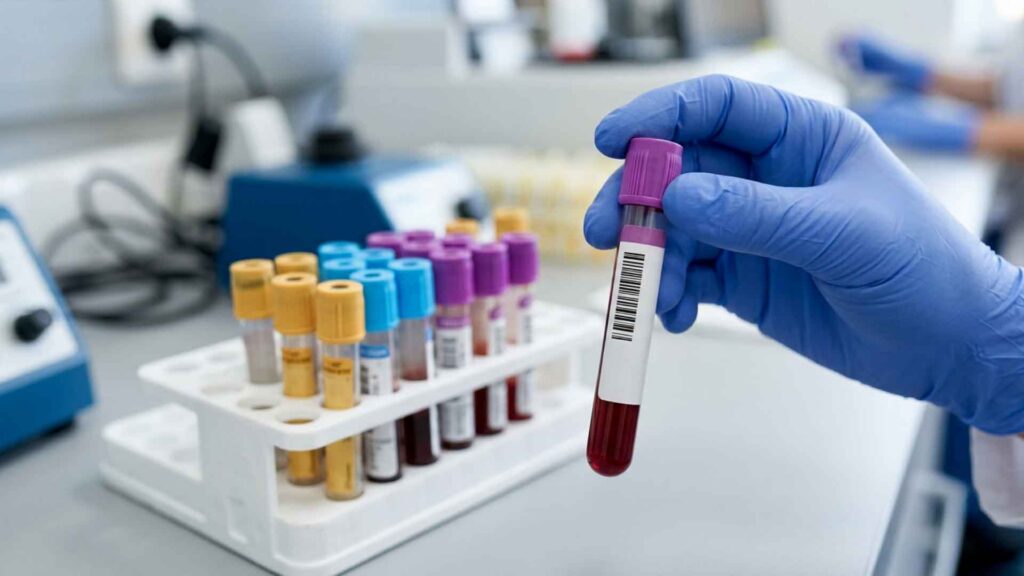
The real value of biomarker data isn’t the number. It’s the head start. Early detection gives you room to act with lifestyle and clinical changes while a problem is still easy to influence, long before it hardens into a diagnosis.
Picture two versions of the same patient. In the first, biomarker testing flags rising HOMA-IR and elevated CRP two years early. Insulin resistance is still responsive, so the plan starts with targeted nutrition changes and inflammation reduction. Weight stabilizes, energy returns, and no medication is needed.
In the second version, nothing gets measured until fasting glucose finally crosses the line into prediabetes. Now the same person is managing a named condition, and the conversation shifts toward medication rather than prevention. Same body, same biology, very different set of options, decided almost entirely by timing.
That’s how results become a plan. Your numbers point somewhere specific: elevated HOMA-IR and rising CRP might steer you toward a medical weight loss program and nutrition counseling first, with treatments like GLP-1 therapy, tirzepatide treatment, or Zepbound considered only if the data supports it. Instead of guessing, you build from measurable evidence while you still have the most options to address it.
ALSO READ: Semaglutide vs. Tirzepatide: Which One Is Right for You?
When Are Biomarker Trends More Useful Than Standard Blood Tests?
Neither approach is “better.” Each fits a different situation, and knowing which tool matches your need is the point.
Standard blood testing is the right call when the question is acute or well-defined. It’s built for exactly that:
- Assessing sudden illness or an infection
- Post-surgical or hospital monitoring
- Screening for a known, established disease
- Emergency evaluation where fast, single-point data drives decisions
Biomarker trend tracking earns its keep when the question is slower and harder to pin down:
- Unexplained fatigue, weight, or energy changes with “normal” labs
- Watching how your body responds to a treatment plan over months
- Catching early metabolic shifts that haven’t crossed a diagnostic threshold yet
- Checking whether your current nutrition, movement, or medication approach is actually working
A rising HOMA-IR trend across three checks tells you insulin sensitivity is slipping long before any single glucose result would. One test is a photo. A trend is the movie, and direction is what lets you act early.
RELATED ARTICLE: How Does Tirzepatide Work for Weight Loss?
How to Get Advanced Metabolic Testing
Advanced biomarker testing is usually ordered through a qualified naturopathic doctor or a metabolic-focused practice. This helps ensure the right markers are selected, collected properly, and reviewed against your symptoms, history, and goals.
At The Adapt Lab, services are provided on an out-of-pocket basis, which allows testing and treatment decisions to be guided entirely by your clinical needs rather than insurance limitations.
Coverage and HSA/FSA Eligibility
Many advanced biomarker panels go beyond standard screening protocols, so traditional insurance may not fully cover them. Coverage depends on your plan, medical history, and the specific tests ordered.
HSA (Health Savings Account) and FSA (Flexible Spending Arrangement) funds may help cover eligible lab testing expenses, but confirm your plan details before scheduling. Two points matter most:
- Clinical interpretation matters: Your results are most useful when a clinician reviews them with your symptoms, health history, and goals in mind.
- Coverage varies: Your insurance plan, HSA, or FSA administrator can confirm what qualifies under your specific benefits.
Start Advanced Biomarker Testing at The Adapt Lab in Solana Beach
If you have been told your labs look “fine,” your next step may be understanding which markers matter and how they change over time. Complete testing connects symptoms to measurable data instead of relying on a single number from a once-a-year panel.
At The Adapt Lab in Solana Beach, Dr. Chad Larson uses advanced lab testing, validated diagnostics, and the Metabolic OS Reset to evaluate your health with more clinical depth. This approach turns your lab results into practical next steps for energy, weight management, and metabolic restoration.
If your labs have been telling you everything is fine, but your body has been telling you otherwise, that gap is worth investigating. Contact The Adapt Lab to start with advanced metabolic testing and a more complete view of what your results may be showing.
Frequently Asked Questions
Do I need to fast before metabolic testing?
Often, yes. Glucose, insulin, and lipid markers usually require 8 to 12 hours of fasting for more accurate results. Other markers, like cortisol or certain hormones, may depend more on timing than fasting. Your clinic will give you instructions based on your panel.
How often should I get a metabolic screening?
A baseline test shows where you stand now. After that, testing two to four times per year helps track trends if you are changing your nutrition, exercise, medication, or treatment plan. If your results are stable, annual metabolic screening may be enough.
Is a metabolic screening test the same as genetic testing?
No. A metabolic screening test shows how your body is functioning right now. Genetic testing looks at inherited DNA that does not change. Biomarkers can shift with lifestyle, stress, hormones, inflammation, and treatment.
Can I do biomarker testing at home, or do I need a clinic?
Some tests can be done at home with a finger prick, saliva, or urine sample. Clinic-based metabolic testing adds clinician interpretation and a plan built on your history, symptoms, and goals.
How long does it take to get results in metabolic testing?
Most results come back within a few days to 2 weeks. More advanced panels may take longer, depending on the lab and the markers tested.