Home » Nutrition Counseling
Most nutrition advice is built backward. Someone hands you a meal plan or a list of foods to avoid, then waits to see if your body cooperates. When it doesn’t, the answer is usually that you weren’t trying hard enough.
The Adapt Lab runs nutrition counseling the other direction. We start with your bloodwork. We look at what your insulin, glucose, hormones, micronutrients, and inflammatory markers are actually doing. Then we build a nutrition plan that matches what your body is showing us, not what a generic protocol assumes about you.
That distinction is the entire reason this service exists.


Nutrition counseling at The Adapt Lab is lab-informed clinical nutrition. That means food strategy is treated as a clinical intervention, calibrated to data the same way a medication or supplement protocol would be.
Our patients usually fall into one of two categories. The first group has tried diets, apps, and generic meal plans without lasting results. The second group is doing well on the surface but knows their bloodwork tells a different story than how they feel. Both groups have the same problem: nobody has built their food strategy around what their body is actually doing.
This is where clinical nutrition counseling separates itself from app-based programs and standard dietitian practice. The food advice you get here is grounded in measurable, current data about your metabolism.
Every nutrition counseling engagement at The Adapt Lab moves through a structured clinical process. The details inside each stage are case-specific, but the structure is consistent.
Before any food recommendations are made, we review your bloodwork. If you’ve already done comprehensive metabolic testing at The Adapt Lab, those results are the starting point. If not, we’ll run the panels we need: HOMA-IR for insulin resistance, fasting glucose and insulin, full thyroid markers, lipid panel, inflammatory markers, micronutrient status, and food sensitivity testing where relevant.
Alongside the lab review, we go through your full health history, current medications, prior dietary attempts, digestive patterns, sleep, stress, and how your body responds to different foods.
Lab data is one input. The other is what your body is telling you day to day. We work through your typical eating patterns, the foods that make you feel better or worse, energy fluctuations across the day, sleep quality after specific meals, and the points in your week where structure breaks down.
This step is where patients often find their first real insight. The pattern they thought was random (the 3 p.m. crash, the post-dinner cravings, the bloating that comes and goes) usually has a measurable metabolic explanation.
After the lab review and the lifestyle mapping, we build a plan. The plan is case-specific and grounded in your bloodwork, your goals, and what’s realistic for your life.
This is not a meal-plan PDF. It’s a clinical strategy that addresses macronutrient structure, meal timing, glucose response, gut health support, micronutrient gaps, and the specific foods or food categories that your data and symptoms suggest are working against you. The plan is meant to hold for years, not weeks.
Nutrition is iterative. Bodies change. Goals shift. New labs reveal new patterns.
Patients return for follow-up sessions on a cadence appropriate to their needs, with re-tested labs at structured intervals. The plan adjusts as your data does. If your HOMA-IR is dropping, the strategy that got you there may not be the strategy that gets you to the next milestone.
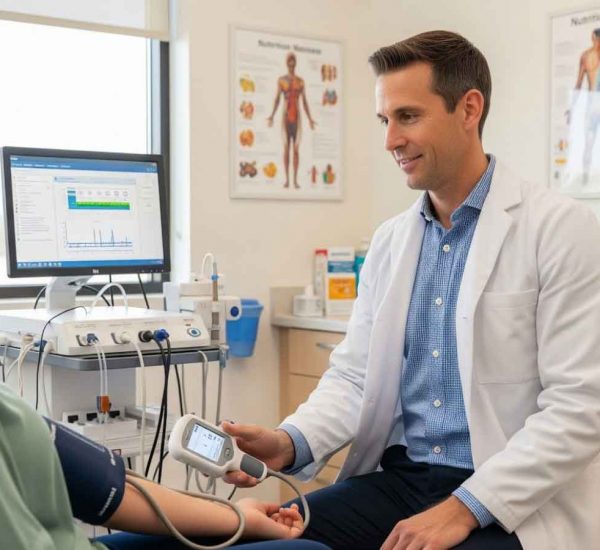

Nutrition counseling at The Adapt Lab is rarely about generic weight loss or a single dietary preference. It’s a clinical tool used to address specific patterns.
Patients with elevated HOMA-IR, prediabetic A1c, or stalled metabolic progress benefit from nutrition strategy built around glucose response, protein structuring, and meal timing. The food plan is one of the most direct ways to move insulin resistance over months.
When food sensitivity testing shows reactivity to specific foods, or when symptoms point to gut dysfunction (bloating, irregular digestion, post-meal fatigue), the nutrition plan addresses elimination, reintroduction, and gut-supportive eating patterns. We integrate the testing results with what you’re actually experiencing.
Hormonal shifts (perimenopause, low testosterone, thyroid dysfunction, PCOS) and chronic inflammation respond meaningfully to dietary structure. Nutrition counseling at The Adapt Lab can be paired with bioidentical hormone balancing when the lab picture supports it.
Patients finishing a medical weight loss program need a nutrition strategy that holds the result. The months on a peptide are also the months when the nutrition foundation gets built. After the medication tapers, ongoing nutrition counseling is what protects the result long-term and prevents regain.

Three structural differences make clinical nutrition counseling at The Adapt Lab a different service from what most patients have tried before.
Apps, meal-plan subscriptions, and most standard dietitian visits start with a goal and a questionnaire. We start with current lab data. The plan is built to move specific markers, and progress is measured against those markers, not just the scale or how you feel on a given day.
Nutrition counseling at The Adapt Lab is overseen by Dr. Chad Larson, a Certified Clinical Nutritionist with more than two decades of clinical practice in metabolic and functional medicine. The CCN credential matters here. It’s a clinical-level certification focused on the use of nutrition as a therapeutic intervention, integrated with bloodwork, supplementation, and medical context. Most weight loss programs and standard dietitian practices don’t operate at that level.
Static meal plans assume the body that needs the plan today is the same body that will need it in three months. It isn’t. Our nutrition strategy adjusts as your labs move, your goals shift, and your life changes. The follow-up cadence is part of the service, not an upsell.
Nutrition counseling at The Adapt Lab is appropriate for adults who want a real clinical engagement around food, grounded in their data. You may be a fit if any of the following apply:
If you don’t fall into one of these categories cleanly, the consultation will tell us whether nutrition counseling is the right service or whether a different starting point makes more sense.
The cadence and intensity vary by patient, but most engagements share a similar shape.
The initial visit runs longer than a typical office appointment. Plan on a structured review of your labs, your health history, and your food and lifestyle patterns. By the end of the first session, you’ll have an initial plan to work with and a clear sense of what we’re tracking.
Follow-ups are scheduled based on what your case needs: closer-spaced visits during active phases, longer intervals during maintenance. Re-testing labs at structured points tells us whether the strategy is moving the metabolic markers we care about. Adjustments are made based on the data, not on guesswork.
Realistic expectations to hold:

If you’re ready for nutrition counseling that’s built on your actual bloodwork instead of a generic protocol, the first step is a consultation. We’ll review what you’re experiencing, look at any prior labs you’d like to bring in, and outline what the testing and counseling structure would look like for your situation.
The Adapt Lab is led by Dr. Chad Larson and is located in Solana Beach, serving patients across North County San Diego.
Contact The Adapt Lab to schedule a consultation with our nutritionist.